
Personal Data, Practice Software, and Your Mandatory ROPA
Introduction: Why Data Protection Matters for Allied Health Practices
As an Allied Health practitioner, whether running a podiatry, osteopathy, physiotherapy, or chiropractic clinic as a sole trader or small Ltd company, your daily work revolves around patient trust. You handle detailed clinical histories, treatment plans, and personal details.
However, many practice owners assume that data protection regulations only apply to large healthcare trusts or large companies with dedicated legal teams. In reality, private clinics process some of the most sensitive data under UK law, making back-office compliance an essential operational foundation.
1. What Counts as Personal & Health Data in Your Clinic?
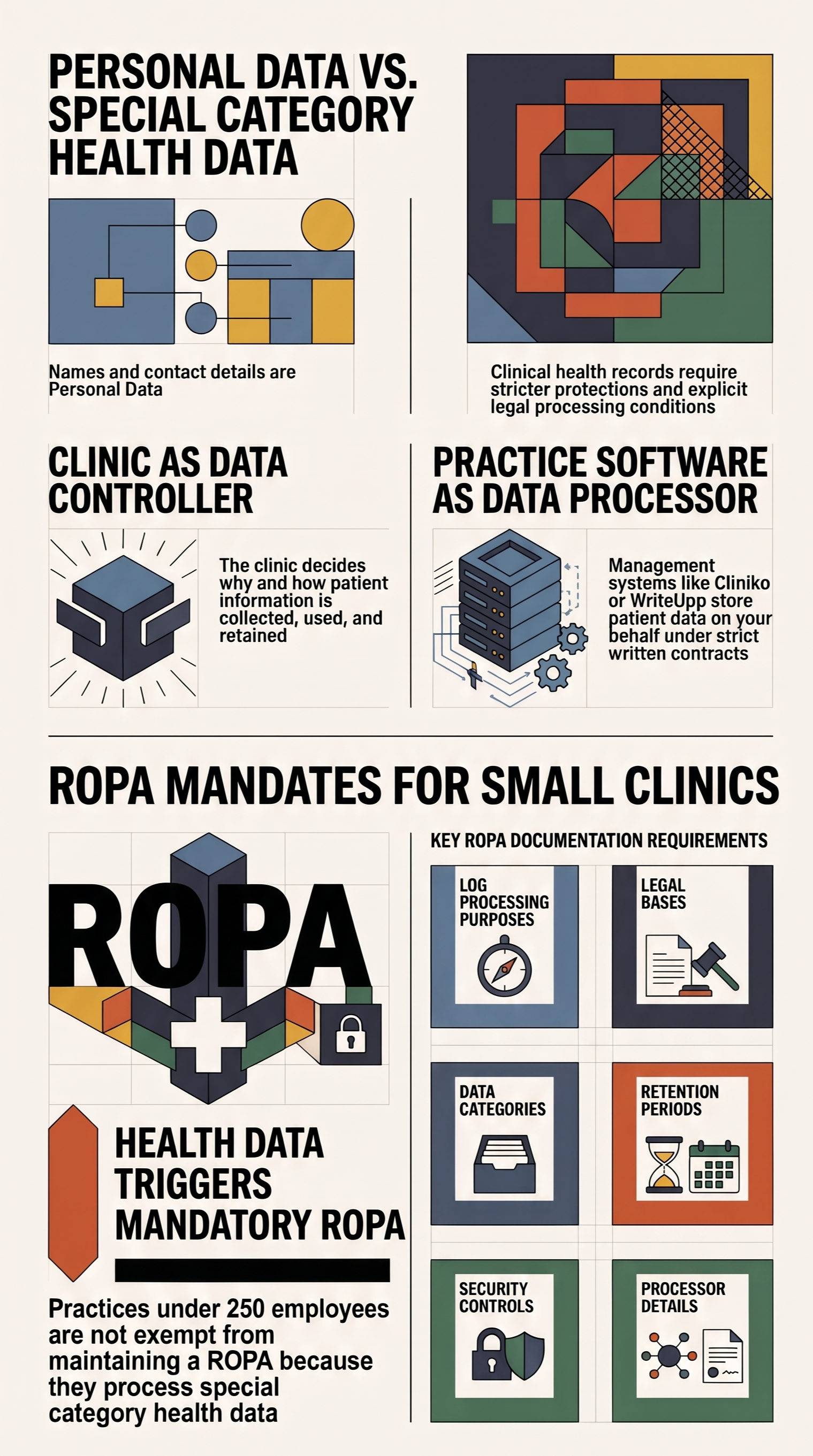
Data protection law governs how living individuals' information is collected, stored, and managed. Understanding the distinction between standard personal details and sensitive health records is the first step in setting up compliant clinic systems:
Personal Data: Any information relating to an identified or identifiable living person. In a clinic, this includes patient names, home addresses, phone numbers, email addresses, and billing records. General company information (such as info@clinicname.co.uk) is corporate data, but sole trader tax returns or staff details constitute personal data.
Special Category Data (Health Records): UK data protection law identifies nine specific types of sensitive information that require extra legal protection, including health data. In your practice, health data encompasses clinical assessment notes, medical history forms, treatment logs, GP referral letters, and physical diagnostic results.
The Legal Impact: Because compromised health records pose a higher risk of distress, discrimination, or harm to patients, processing health data requires both a standard lawful basis (such as contractual necessity for treatment) and a specific special category condition (such as the provision of health or social care).
2. Who’s Who? Controller vs. Processor in Your Practice
Understanding the legal roles within your clinic setup prevents compliance confusion and ensures accountability:
Data Controller (Your Practice): The sole trader practitioner or Ltd company is the Data Controller. As the controller, you decide why and how patient information is collected, how long clinical records are retained, and who has access to them. You hold overall legal responsibility for data protection compliance.
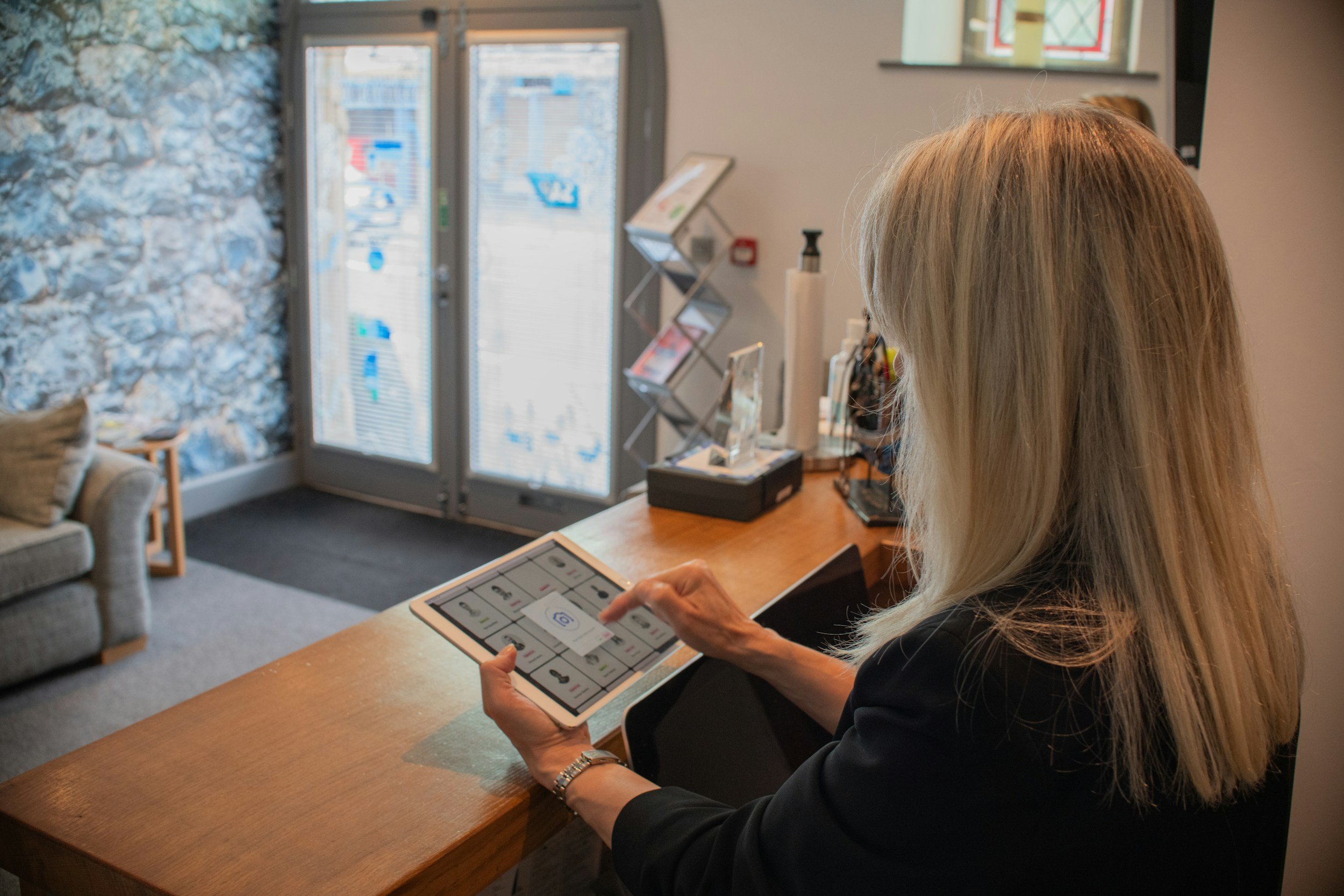
Data Processor (Your Software & Services): A Data Processor is a separate entity that processes personal information on your behalf, strictly under your instructions. In an allied health clinic, your cloud-based Practice Management Software (PMS) (e.g., Cliniko, WriteUpp, or JaneApp), online booking widgets, outsourced accounting platforms, and IT support services act as Data Processors.
Sub-processors: If your PMS provider uses a third-party SMS gateway to send automated appointment reminders to your patients, that SMS gateway acts as a sub-processor.
Mandatory Written Contracts
Controllers are legally required to have a written contract or binding terms of service with every Data Processor. Under UK data protection law, these contracts must explicitly state:
The duration, nature, and purpose of the processing.
That data is processed only on documented instructions from your clinic.
Mandatory confidentiality obligations for software staff.
Robust cybersecurity measures.
Prior written permission requirements before engaging sub-processors.
Requirements for the processor to assist you in responding to patient rights requests and reporting data breaches.
End-of-contract terms requiring the return or deletion of all patient data.
When using large cloud software providers, you should review their standard terms, privacy policies, and security audit documentation to verify these clauses are present.
3. The ROPA Requirement: Why Small Clinics Aren't Exempt
A Record of Processing Activities (ROPA) is a structured central document mapping out all the personal data your practice holds, why you hold it, where it goes, and how it is secured.
The Small Business Myth
Many practice owners read that organisations with fewer than 250 employees do not need a ROPA.
However, the law states that small organisations must still maintain a ROPA if their data processing:
Involves special category data (such as health records);
Is continuous or systematic (such as regular daily patient consultations and bookings); or
Is likely to result in a risk to individuals' rights and freedoms.
Because Allied Health clinics routinely and systematically handle sensitive patient medical records, all independent health practices, including single-practitioner sole traders, are legally required to keep a ROPA.
What Your ROPA Must Include
Your practice ROPA must document the following:
Processing Purposes: e.g., Patient consultations and medical care, appointment reminders, billing and accounting, and staff payroll.
Categories of Data & Individuals: e.g., Patient health notes, contact details, emergency contacts, and employee files.
Data Sharing: Categories of third parties receiving data (e.g., HMRC, private health insurers, debt recovery agencies).
International Transfers: Details of cloud software hosted outside the UK and applicable safeguard mechanisms (e.g., adequacy regulations).
Retention Schedules: Specific timeframes for keeping clinical notes, financial records, and enquiry forms.
Security Measures: Technical and physical safeguards in place (e.g., role-based access, system encryption, locked storage, clear desk policies).
Practitioner Action Checklist
Audit Your Data: Identify where patient contact details, medical records, and billing details are stored (paper charts, PMS, desktop files).
Check Processor Terms: Ensure your Practice Management Software and cloud tools provide compliant written controller-processor terms.
Establish Your ROPA: Create a baseline Record of Processing Activities tailored to your clinic's workflows.
Free Practice Download:
Need a pre-populated ROPA for your clinic?
Download our free, tailored Allied Health ROPA Excel Template and Companion Guide.
